Celebrating over 1 Million Downloads and 50,000 Free CEUs on the Sound Bites® Podcast | NEW: Get 1 years’ worth of CEUs with the new 15-CEU Podcast Course
From Food Shaming to Pandemics – What We Can Learn from Medical Humanities
“Medical humanities can be defined as an interdisciplinary, and increasingly international endeavor that draws on the creative and intellectual strengths of diverse disciplines, including literature, art, creative writing, drama, film, music, philosophy, ethical decision making, anthropology, and history, in pursuit of medical educational goals.[2] The humanistic sciences are relevant when multiple people’s perspectives on issues are compiled together to answer questions or even create questions. The arts can provide additional perspective to the sciences.” (Wikipedia – accessed 12-2-20)
Tune in to this episode to learn about:
health is a malleable concept
food has been tied to social status throughout history
food insecurity and obesity are connected
systemic deprivation influences food “choices”
medical humanities can help inform and frame science and research
public health recommendations and shaming
silver linings in pandemics
Medical humanities helps us think about how we are framing the scientific or research questions that puzzle us.”
Dr. Kari Nixon, PhD
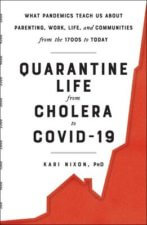
Dr. Kari Nixon is an assistant professor at Whitworth University. Her research focuses on social understandings of death, disease, and community. She teaches regularly on topics such as medical humanities, Victorian literature, and even zombies. Her first academic book, Kept From All Contagion: Germ Theory, Disease, and the Dilemma of Human Contact came out in May 2020, and her mass market book, Quarantine Life: From Cholera to Covid-19, What Pandemics Teach Us About Parenting, Work, Life and Communities from the 1700s to Today, comes out in June 2021. Written for all audiences, Quarantine Life presents 30 lessons from past epidemics and how we can apply them to cope with the strain of the novel Coronavirus.
Science is only as good as the human actors that create that knowledge. We, as human actors, have the opportunity to shape it and better it.”
About the book:
Throughout history, there have been numerous epidemics that have threatened mankind with destruction. Diseases have the ability to highlight our shared concerns across the ages, affecting every social divide from national boundaries, economic categories, racial divisions, and beyond. Whether looking at smallpox, HIV, Ebola, or COVID-19 outbreaks, we see the same conversations arising as society struggles with the all-encompassing question: What do we do now?
Quarantine Life from Cholera to COVID-19 demonstrates that these conversations have always involved the same questions of individual liberties versus the common good, debates about rushing new and untested treatments, considerations of whether quarantines are effective to begin with, what to do about healthy carriers, and how to keep trade circulating when society shuts down.
This immensely readable social and medical history tracks different diseases and outlines their trajectory, what they meant for society, and societal questions each disease brought up, along with practical takeaways we can apply to current and future pandemics—so we can all be better prepared for whatever life throws our way.
Food Bullying – Podcast Episode #130 with Michele Payn
LISTEN, LEARN AND EARN
Listen to select Sound Bites Podcasts and earn free CEU credits approved by the Commission on Dietetic Registration (CDR) for registered dietitian nutritionists and dietetic technicians, registered. Get started!
Get Melissa’s Sound Science Toolkit here!
Partnerships:
Sound Bites is partnering with the Association of Diabetes Care and Education Specialists (formerly the American Association of Diabetes Educators)! Stay tuned for updates on the podcast, blog and newsletter!
Sound Bites is partnering with the International Food Information Council! Stay tuned for updates on the podcast, blog and newsletter!
Sign up for my monthly newsletter and episode eblasts so you never miss an update!
Listen on Stitcher (Android)
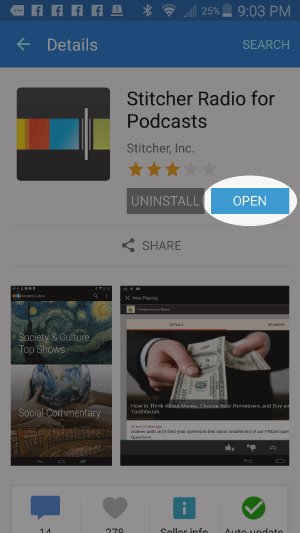
Install the Stitcher App
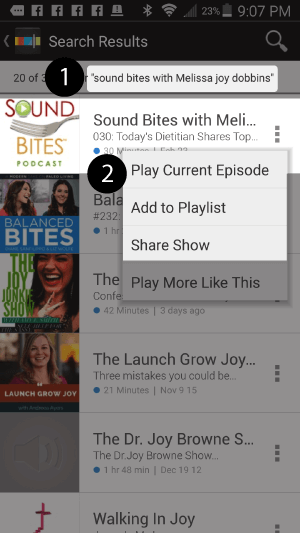
1. Search for “sound bites with melissa joy dobbins” 2. Choose Play Current Episode or Add to Playlist
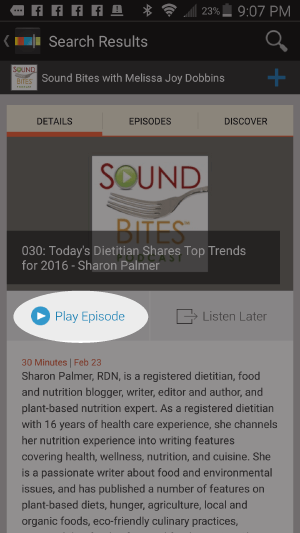
Choose “Play Episode”
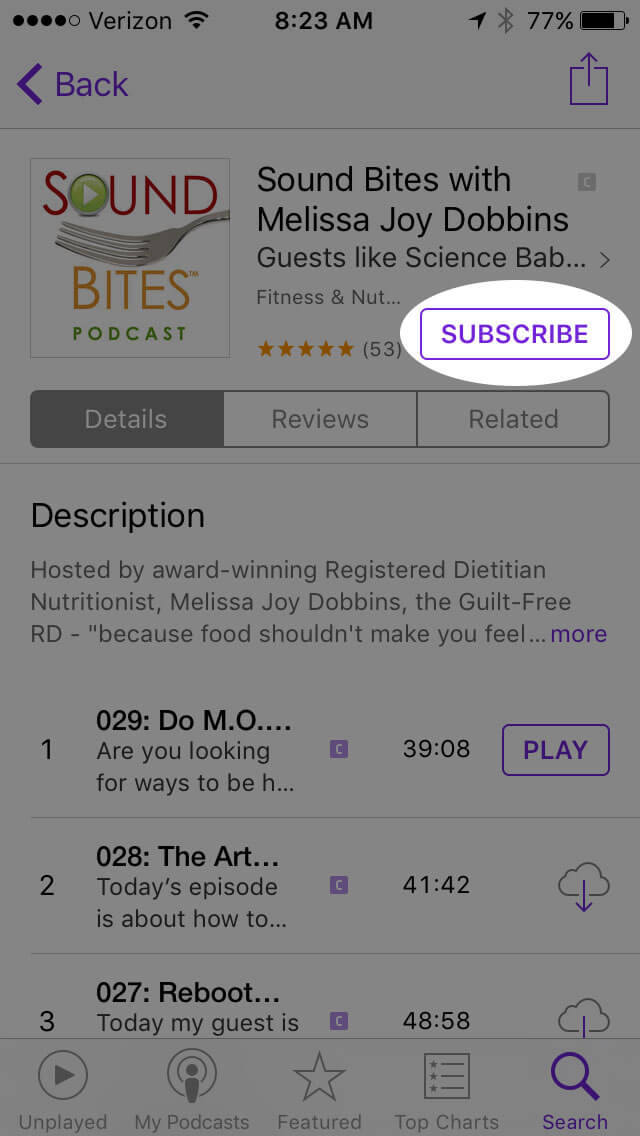
Subscribe & Review on iPhone
Open the “Podcast” app on your iPhone
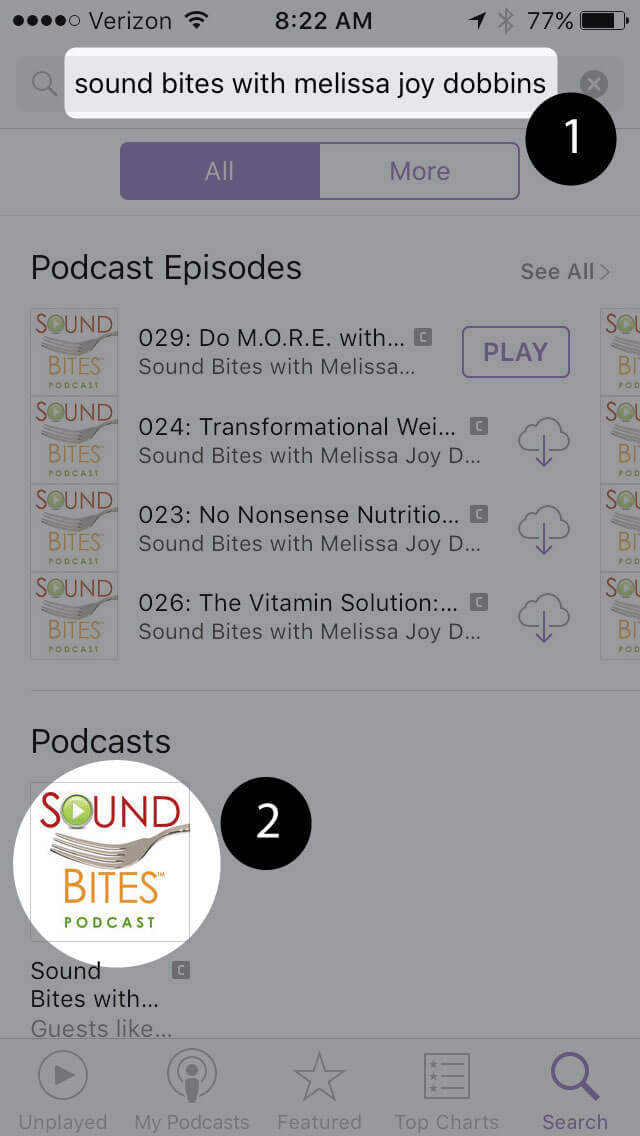
Search for “Sound bites with melissa joy dobbins”
Open the podcast and click “Subscribe” and your done!
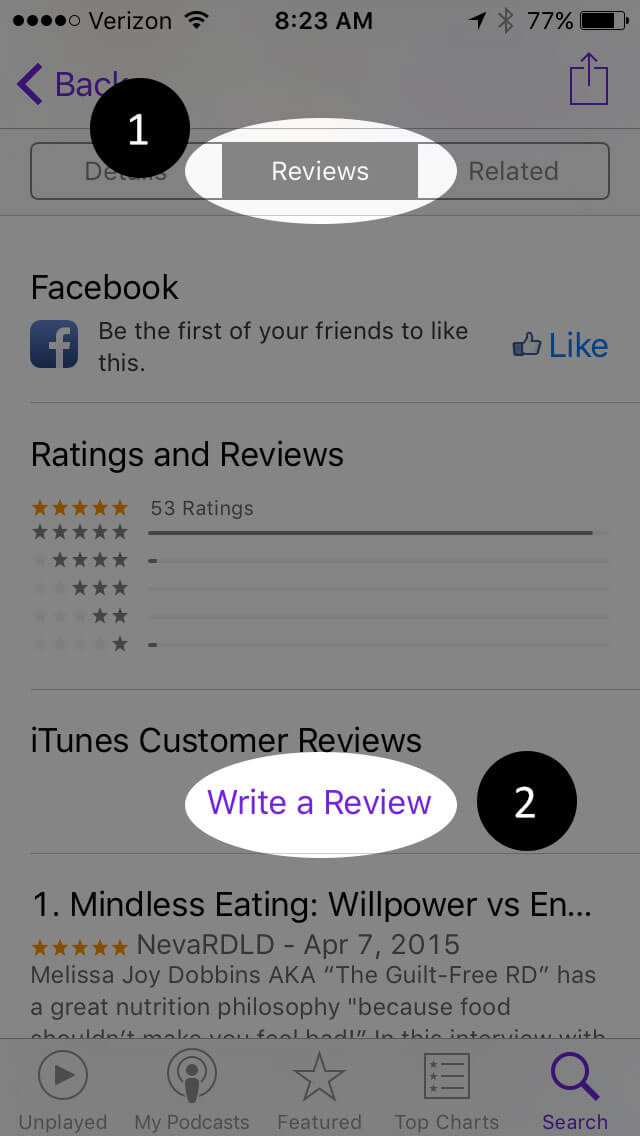
Write a Review
Click “Reviews”, then “Write a Review”.
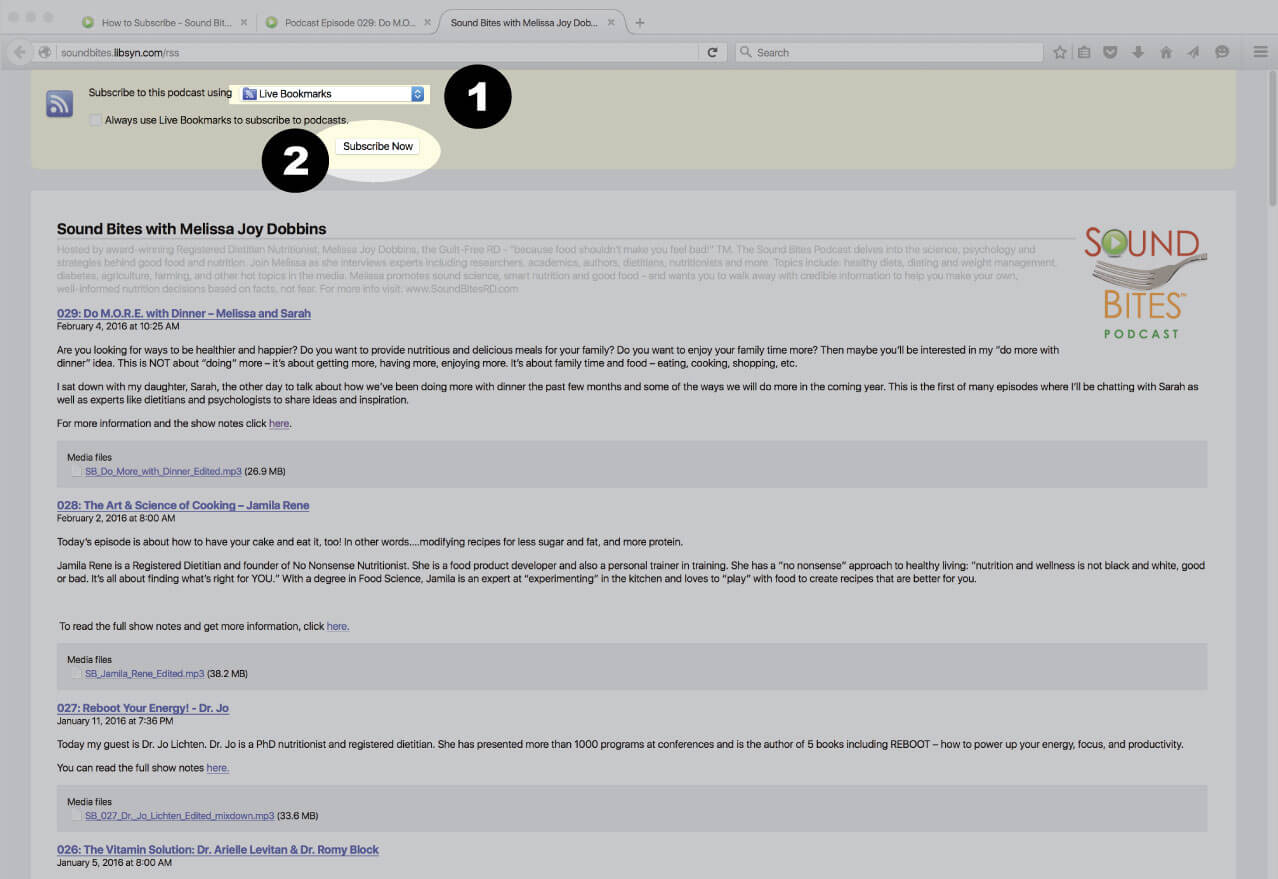
Subscribe via RSS Feed
Navigate to any podcast player . Click on the RSS feed icon.
Click on the RSS feed icon.
Click on RSS Feed
Choose which application you would like to use to receive the RSS feed
Click “Subscribe Now”
Confirm settings and subscribe.
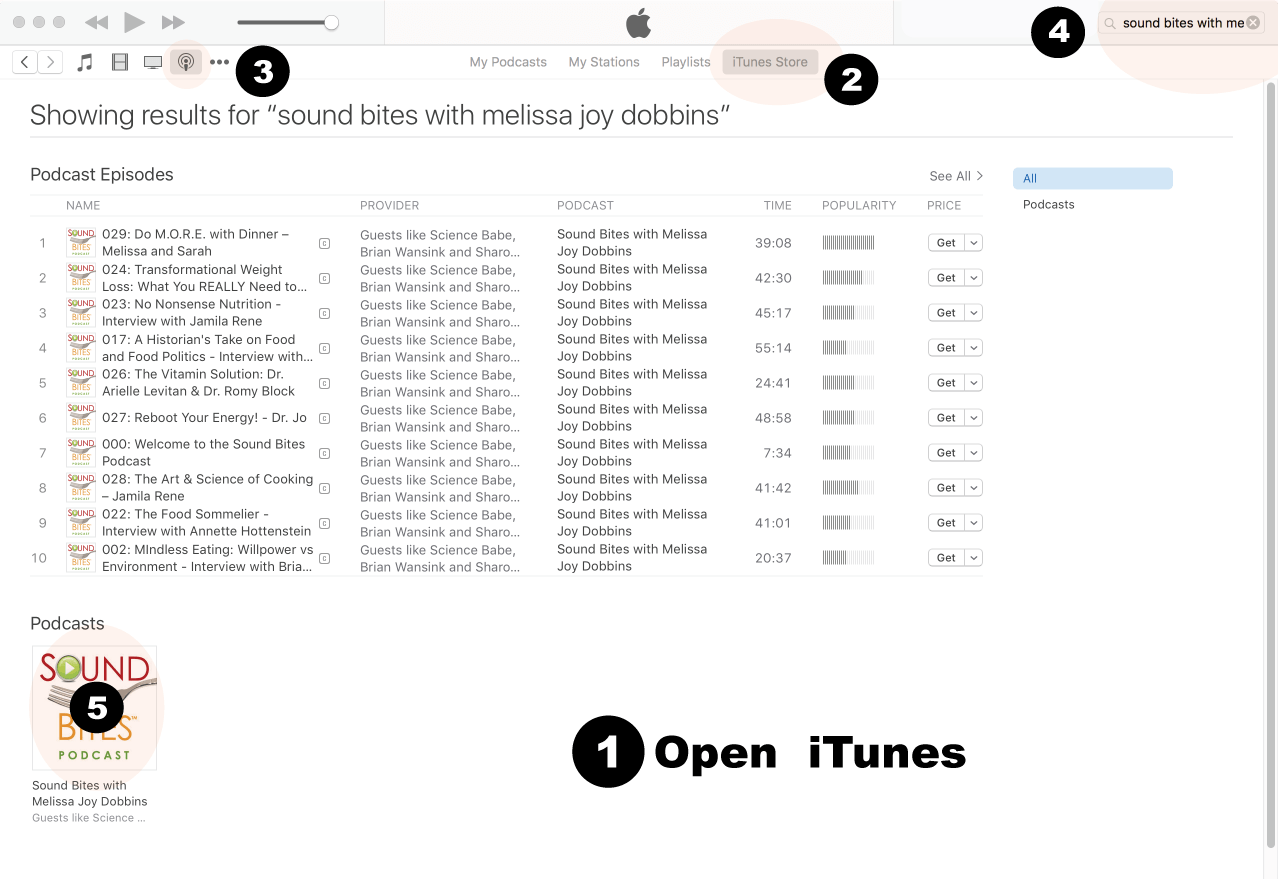
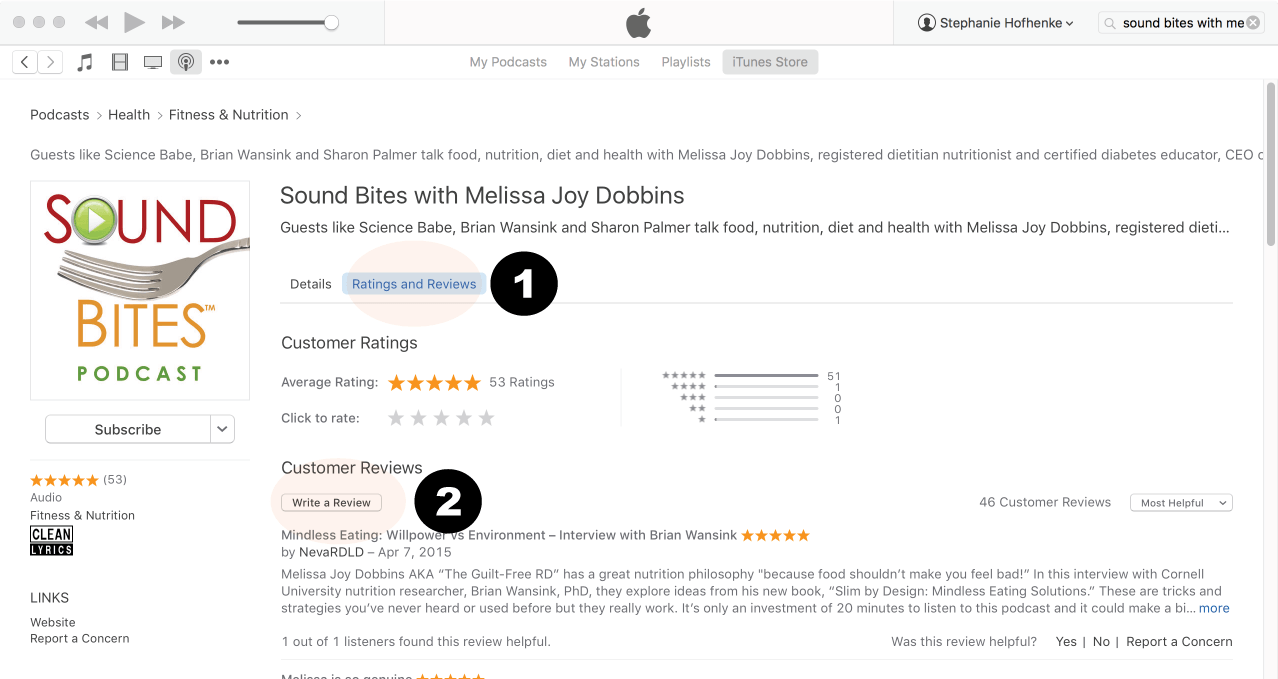
How to Review in iTunes
Open iTunes desktop application
Click iTunes Store
Click on Podcasts
Search for “Sound bites with Melissa Joy Dobbins”
Click on podcast image
Search for Sound Bites podcast in iTunes
Click Ratings & Reivews
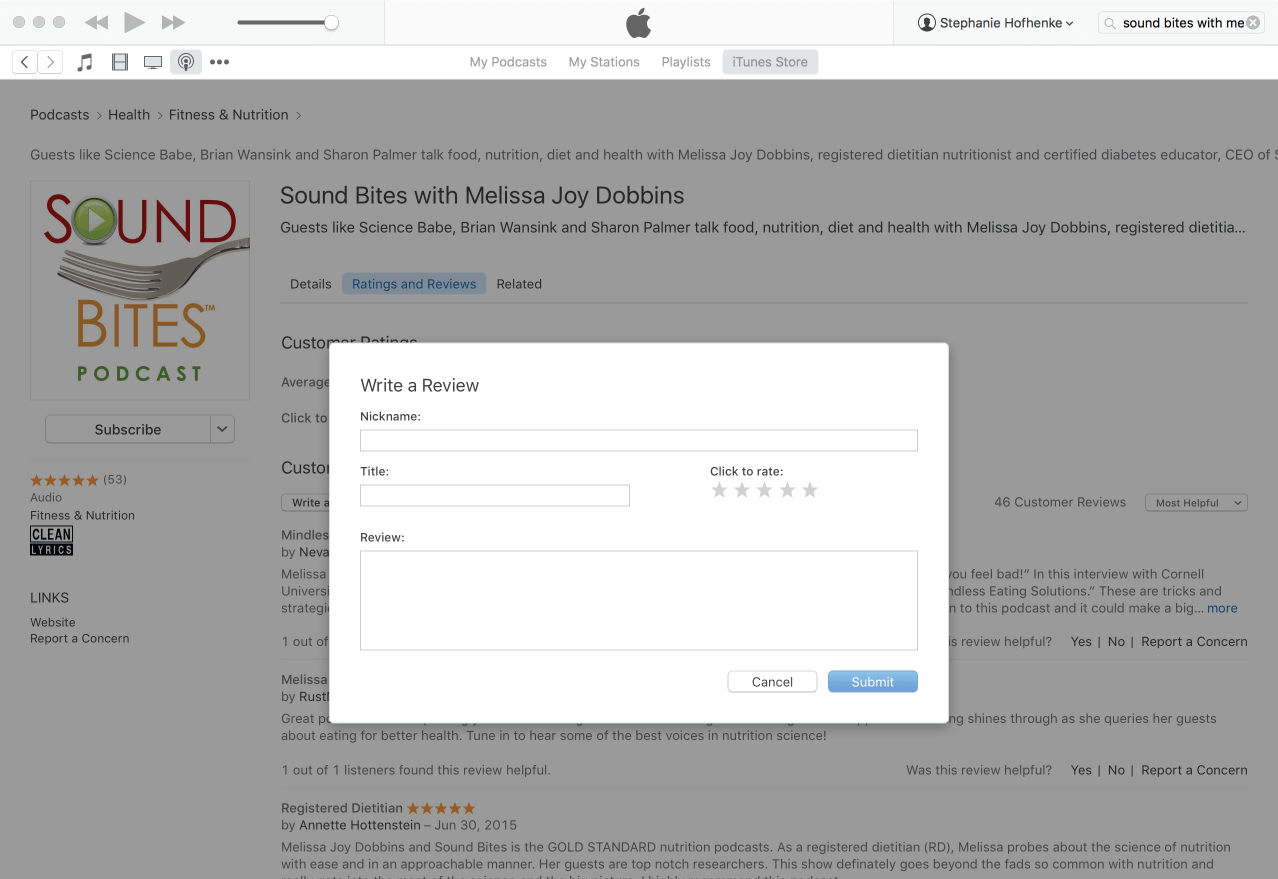
Click Write a Review
View reviews and write your own review.
Write your review…. Thank you!
Write your review!
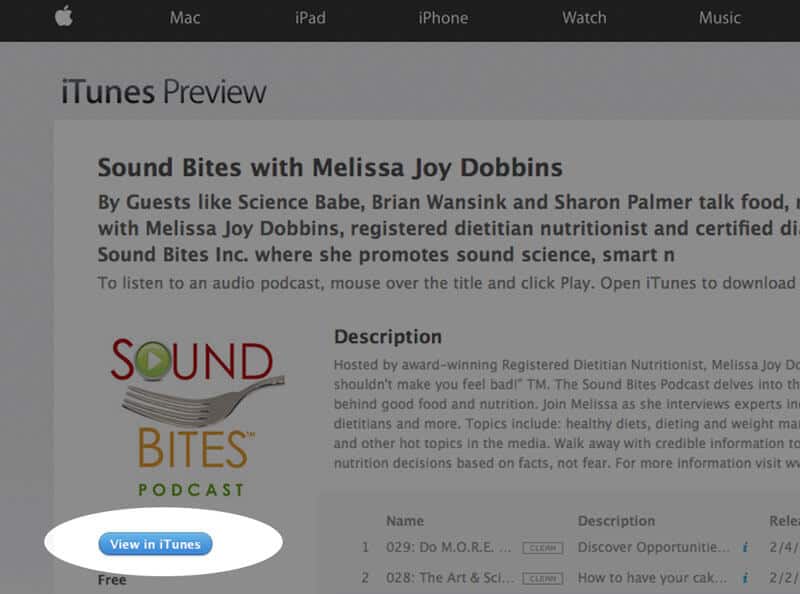
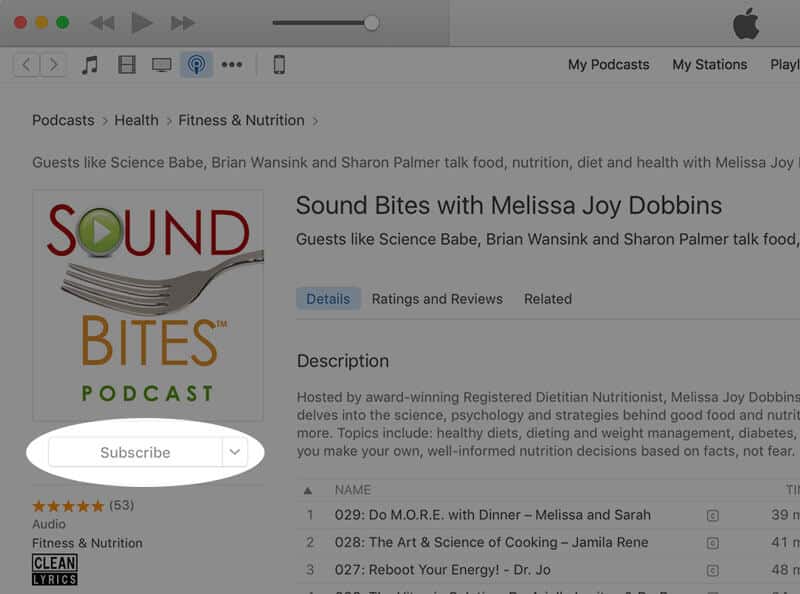
How to subscribe via iTunes
Click here to view the Sound Bites Podcastin iTunes, then click the blue “View in iTunes” button. This will open your iTunes application directly to Sound Bites Podcast. Click the “Subscribe” button, and your done!